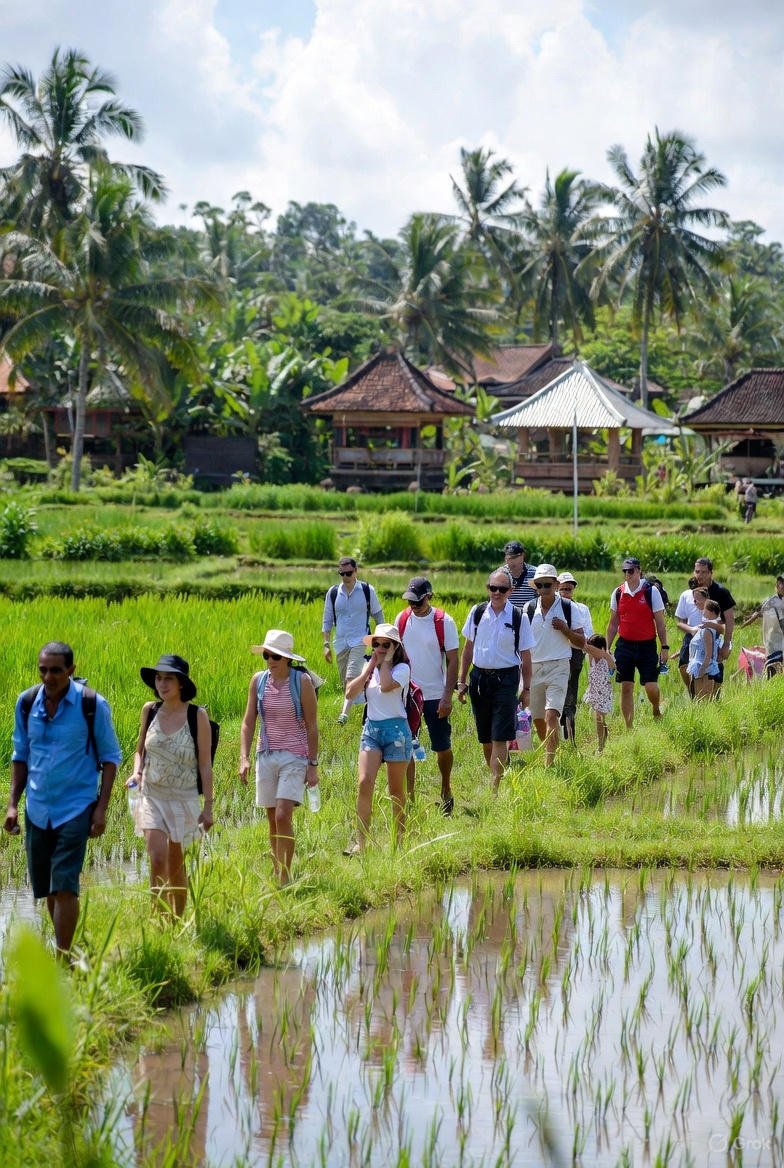

In the summer of 2017, just months after concluding his historic two-term presidency, Barack Obama sought a respite from the relentless pace of political life. Accompanied by his wife, Michelle, and their daughters, Malia and Sasha, the former First Family embarked on a journey to Bali, Indonesia—a destination that held personal significance for Obama. Having spent part of his childhood in Jakarta from 1967 to 1971, where his mother, Ann Dunham, worked as an anthropologist, Obama viewed this trip as a kind of homecoming. Bali, often dubbed the “Island of the Gods,” offered a perfect blend of cultural immersion, natural beauty, and adventure. Among the highlights of their five-day vacation was a memorable visit to the iconic Balinese paddy fields, where the family wandered through lush rice terraces, connecting with local traditions and the island’s timeless agricultural heritage.
The Obamas arrived in Bali on June 23, 2017, touching down on a private jet at Ngurah Rai International Airport. They were greeted with warm Balinese hospitality, including a handshake from Bali’s Governor, Made Mangku Pastika, and a crowd of locals eager to catch a glimpse of the world-famous visitors. Michelle, dressed casually in a white pullover, led the family through the arrivals area, with Malia and Sasha close behind. The family’s security detail, often referred to as the “Ring of Obama,” formed a protective perimeter, blending seamlessly with the tropical surroundings. This arrival set the tone for a vacation that balanced relaxation with exploration, far removed from the White House’s structured routines.
Settling into the luxurious Four Seasons Resort in Ubud, a serene enclave nestled amid Bali’s central highlands, the Obamas wasted no time diving into the island’s cultural offerings. Ubud, known as Bali’s artistic heart, provided an ideal base with its verdant landscapes, traditional architecture, and proximity to key attractions. On their first full day, June 24, the family visited the Agung Rai Museum of Art (ARMA), a repository of Balinese creativity featuring traditional and modern paintings. They were welcomed with performances of the Pendet dance, a graceful ritual offering, and the Tumbuk Padi dance, symbolizing the island’s agricultural roots. Obama, ever the inquisitive traveler, took particular interest in a 1930s painting by renowned Balinese artist I Gusti Nyoman Lempad, engaging in discussions about its historical context. Michelle and the girls captured moments on their phones and a DSLR camera, preserving the vibrant colors and intricate details of the artworks.
The following day, June 25, marked the pinnacle of their trip: a visit to the Jatiluwih rice terraces in Tabanan regency. This UNESCO World Heritage Site, spanning over 600 hectares, exemplifies Bali’s ancient subak irrigation system—a cooperative water management practice dating back over a thousand years. The terraces, carved into volcanic hillsides, create a mesmerizing patchwork of emerald green paddies that cascade like giant steps toward the horizon. For the Obamas, this excursion was more than sightseeing; it was an opportunity to connect with Bali’s soul, where agriculture, spirituality, and community intertwine.
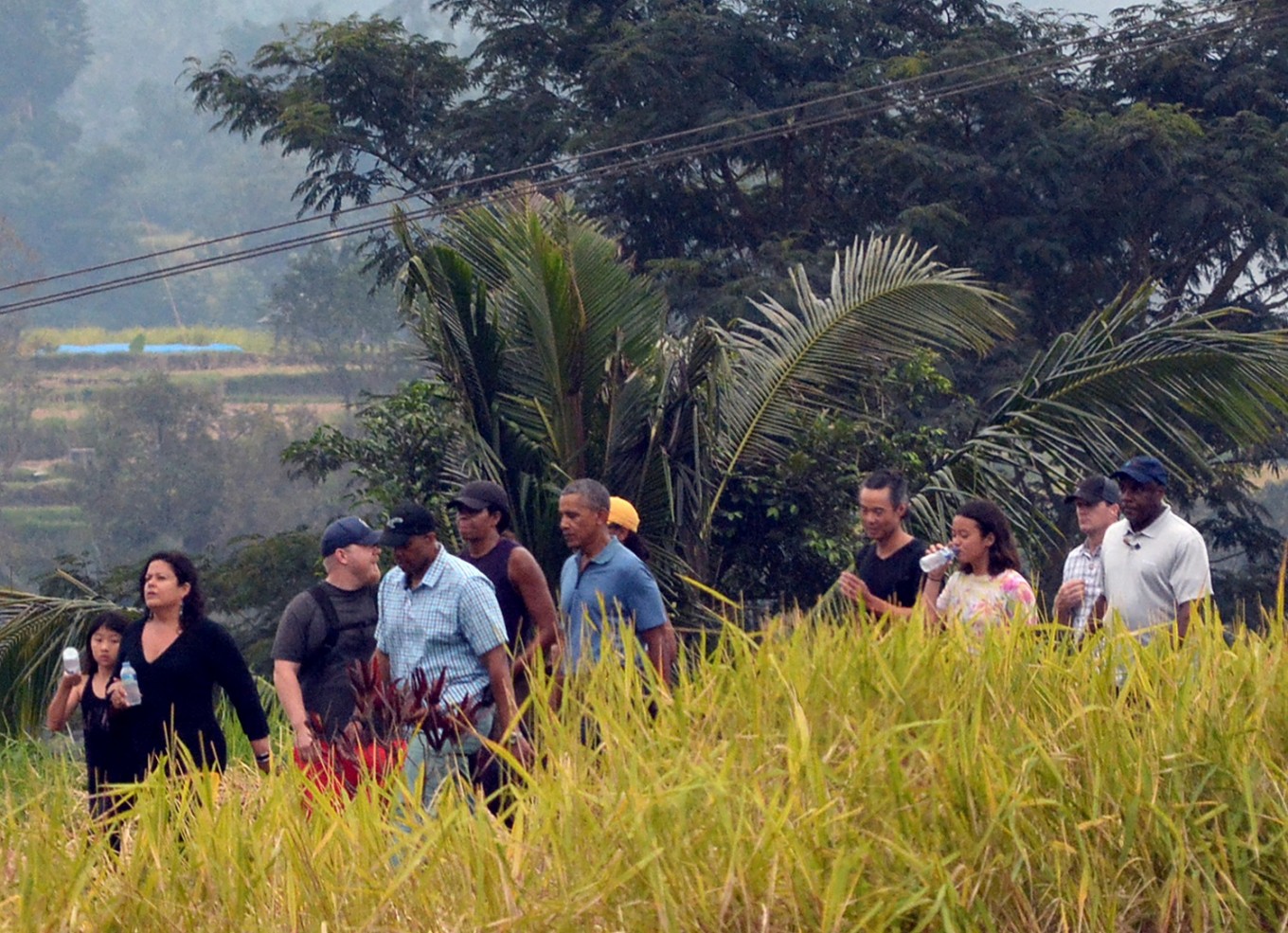
Dressed in casual attire suitable for the tropical humidity—Barack in red shorts and a straw hat, Michelle in sneakers leading the way, and the daughters in sarongs to respect local customs—the family embarked on a 500-meter hiking route that wound through the paddy fields. The path offered panoramic views of the terraces, with mist-shrouded mountains in the distance and the gentle rustle of rice plants swaying in the breeze. As they walked, the Obamas paused to admire the intricate irrigation channels, marveling at how farmers have sustained this ecosystem for generations through democratic decision-making and rituals honoring Dewi Sri, the Hindu goddess of rice.
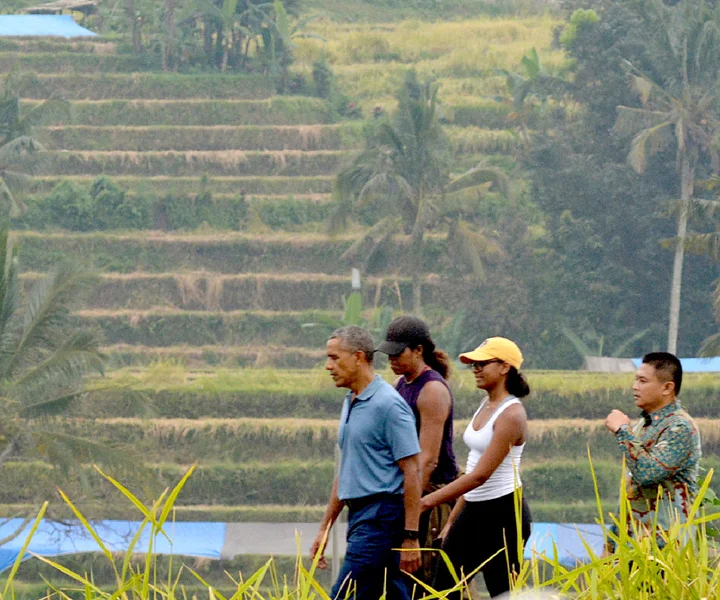
One particularly poignant moment occurred at Pura Subak, a small temple dedicated to the subak system. Here, the family met with local farmers, engaging in conversations about sustainable farming practices and the challenges posed by modernization and tourism. Obama, drawing from his own experiences advocating for environmental policies during his presidency, expressed admiration for the resilience of Balinese agriculture. Photos from the visit capture the family’s genuine delight: Barack waving to onlookers with a broad smile, Michelle grinning as she navigated the uneven terrain, and Malia and Sasha posing with thumbs-up gestures alongside locals—up to eight hands in one iconic shot. These interactions highlighted the Obamas’ approachable nature, turning a celebrity visit into a cultural exchange that left lasting impressions on both sides.
The Jatiluwih visit wasn’t just about the visuals; it immersed the family in Bali’s sensory tapestry. The air was filled with the earthy scent of wet soil and blooming frangipani, while the sounds of distant gamelan music and chirping birds provided a soothing soundtrack. For Obama, whose mother studied Indonesian handicrafts and rural economies, this experience echoed her anthropological work, fostering a deeper appreciation for the island’s heritage. Michelle, known for her initiatives on healthy eating and community gardens during her time as First Lady, likely drew parallels to sustainable food systems back home. The daughters, then teenagers, absorbed the lessons in global citizenship, witnessing firsthand how traditions adapt in a changing world.
Beyond the paddy fields, the Obamas explored other facets of Balinese culture. Earlier in the trip, they visited Tirta Empul Temple, a sacred water temple near Ubud where devotees purify themselves in holy springs. Barack, in jeans and a white polo, gestured animatedly while touring the site, with the family donning sarongs as a sign of respect. This spiritual interlude added a layer of introspection to their vacation, allowing them to reflect on life’s transitions post-White House.
Adventure beckoned on June 26, when the family traded serene hikes for an exhilarating white-water rafting expedition on the Ayung River. Cruising through Bongkasa Village near their resort, they navigated rapids in six boats, guided by five professionals for a two-hour journey. Action shots show Barack instructing Malia on paddling techniques, yellow oars slicing through the frothy waters, while Michelle and Sasha laughed amid the splashes. Post-rafting, the family posed with their crew, sipping fresh coconuts—a quintessential tropical treat. This activity underscored the Obamas’ love for family bonding through shared thrills, much like any ordinary vacationers escaping daily routines.
The Obamas’ Bali vacation extended beyond these highlights, weaving in moments of quiet luxury at their Ubud resort. The Four Seasons, with its thatched-roof villas overlooking rice paddies and the Ayung River, provided a private sanctuary. Evenings likely involved family dinners featuring Balinese specialties like babi guling (roast pork) or nasi goreng (fried rice), discussions about the day’s discoveries, and perhaps stargazing under the equatorial sky. Security measures were discreet yet comprehensive, ensuring the family’s safety without overshadowing their enjoyment.
This trip held broader significance for Bali and Indonesia. Obama’s childhood ties to the country—his stepfather, Lolo Soetoro, was Indonesian, and young Barry (as he was known) attended local schools—made his return a symbol of enduring connections. Indonesian media buzzed with coverage, boosting tourism to sites like Jatiluwih, which saw increased visitor numbers post-visit. The Obamas’ endorsement, implicit through their choice of destination, highlighted Bali’s appeal as a family-friendly paradise blending adventure, culture, and nature.
Delving deeper into the cultural context, Bali’s paddy fields represent more than agricultural marvels; they embody the philosophy of Tri Hita Karana, which promotes harmony among humans, nature, and the divine. The subak system, recognized by UNESCO in 2012, involves community assemblies where farmers allocate water equitably, perform rituals, and maintain terraces collectively. During the Obamas’ hike, they would have observed these elements firsthand—perhaps spotting offerings of flowers and incense at field shrines or watching farmers tending crops with traditional tools. Such encounters likely resonated with Obama’s global leadership ethos, emphasizing cooperation and sustainability.

Michelle Obama, in her memoir “Becoming,” reflects on post-presidency travels as opportunities for reinvention and family reconnection. Though she doesn’t detail the Bali trip specifically, the vacation aligns with her narrative of seeking authenticity amid fame. For Malia, then 18 and preparing for Harvard, and Sasha, 16, the experience offered a break from American high school life, exposing them to diverse worldviews. Photos from Jatiluwih capture their youthful curiosity, phones in hand, documenting the verdant landscapes that contrast sharply with urban Chicago or Washington, D.C.
The environmental aspect of the paddy fields visit cannot be overstated. Bali’s terraces face threats from climate change, overdevelopment, and shifting agricultural practices. Obama’s presence drew attention to these issues, aligning with his presidential legacy on climate accords like the Paris Agreement. By walking those paths, he subtly advocated for preservation, inspiring visitors to tread lightly and support local economies.
As the vacation wound down, the Obamas departed Bali, but not without leaving an indelible mark. Their itinerary inspired travel guides, like those from Indonesia’s tourism board, encouraging families to follow in their footsteps—from Ubud’s arts scene to Jatiluwih’s terraces and Ayung’s rapids. The trip’s media coverage, including viral photos of the family in straw hats and life jackets, humanized the Obamas, showing them as relatable adventurers rather than distant figures.
In retrospect, the 2017 Bali vacation, particularly the paddy fields excursion, symbolized a chapter of renewal for the Obama family. Amid Bali’s lush greenery and warm communities, they found moments of peace, laughter, and learning. For travelers today, it serves as a blueprint for meaningful vacations: one that honors personal history while embracing new horizons. Whether hiking through ancient terraces or rafting turbulent waters, the Obamas reminded us that true escape lies in connection—with family, culture, and the natural world.
:upscale()/2017/06/26/713/n/1922398/b94911cf88a30f83_GettyImages-800711252.jpg)
Expanding on Bali’s allure, the island’s rice terraces are not merely photogenic; they sustain a way of life. Jatiluwih, meaning “truly marvelous” in Balinese, lives up to its name with elevations reaching 700 meters, offering cooler climes and diverse flora. Visitors often spot exotic birds, butterflies, and even wild orchids along the trails. The Obamas’ 500-meter hike, though modest, allowed immersion in this biodiversity, perhaps spotting farmers using the traditional angklung (bamboo instrument) to scare birds or performing the subak’s ritual dances.
Obama’s interest in Indonesian culture stems from his formative years. In “Dreams from My Father,” he recounts Jakarta’s bustling markets and rural excursions, experiences that shaped his worldview. Returning as a former president, he bridged past and present, sharing these roots with his family. Michelle, with her background in community organizing, likely appreciated the subak’s communal governance, drawing parallels to urban gardening initiatives she championed.
The daughters’ involvement added a generational layer. Malia, with her interest in film (later interning on productions), might have framed shots of the terraces’ geometric patterns, while Sasha, known for her athleticism, enjoyed the physical aspects of hiking and rafting. These activities fostered family unity, crucial after years of public scrutiny.
Tourism impacts from the visit were tangible. Jatiluwih saw a surge in inquiries, with operators offering “Obama Trails” tours. Bali’s economy, reliant on visitors, benefited, though it raised discussions on sustainable tourism to prevent overcrowding that could erode the very terraces they admire.
Reflecting on the broader narrative, the Obamas’ vacation exemplifies post-presidential life: purposeful, engaging, and grounded. From policy wonk to paddy field wanderer, Obama’s evolution inspires. As climate and cultural preservation remain pressing, their Bali story underscores the importance of such sites.
In conclusion, the Obama family’s visit to Balinese paddy fields during their 2017 vacation was a harmonious blend of adventure, culture, and reflection. Amid Jatiluwih’s emerald steps, they not only escaped but enriched their lives, leaving a legacy that invites others to discover Bali’s magic.


