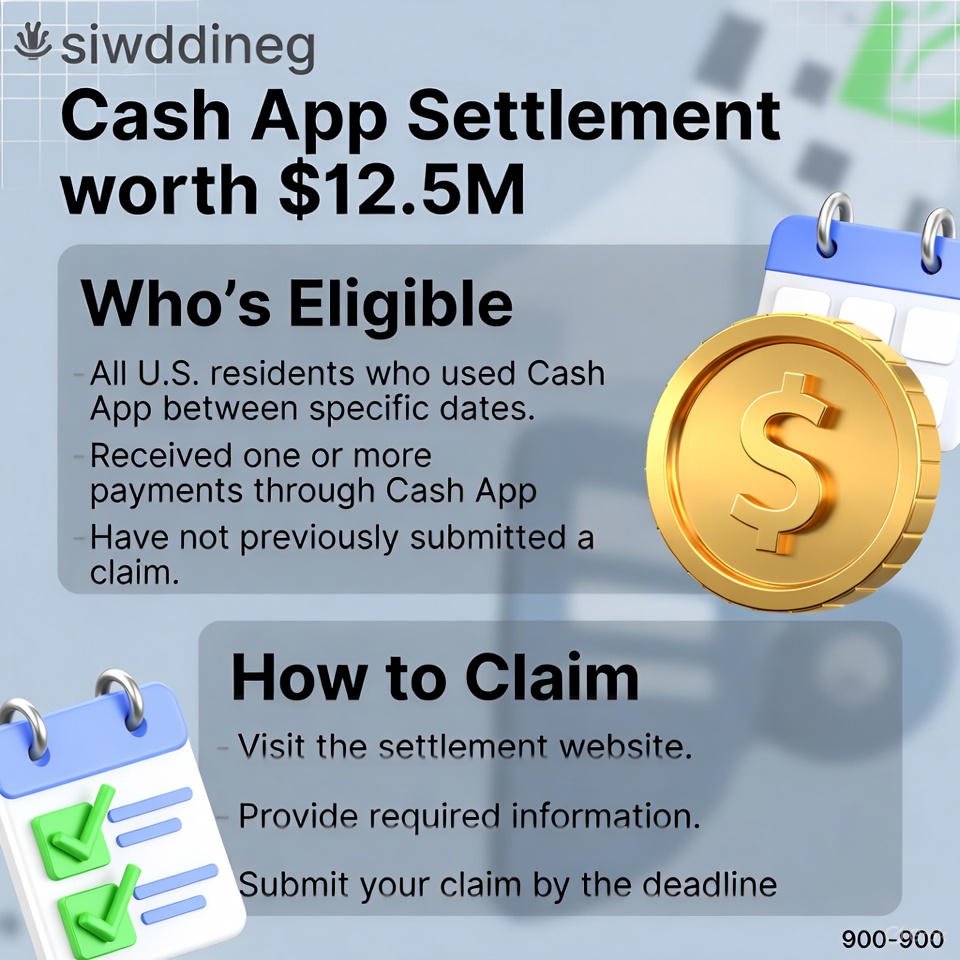

In the fast-paced world of digital payments, convenience often comes at the cost of privacy. Cash App, the popular mobile payment service owned by Block Inc., has revolutionized how millions send and receive money. But for many users, that innovation came bundled with unwanted intrusions—spam texts promoting its referral program. These unsolicited messages, often sent without clear consent, sparked outrage and, ultimately, a landmark class action lawsuit.
Announced in mid-2025, the Cash App spam text lawsuit settlement totals $12.5 million, offering relief to Washington state residents bombarded by promotional pings. This isn’t just about a payout; it’s a victory for consumer rights in an era where personal data feels increasingly commoditized. If you’ve ever deleted a “Join Cash App with my code for $5” text in frustration, this settlement could put up to $147 back in your pocket.
But with the claims deadline having passed on October 27, 2025, and final court approval pending, time is of the essence for those scrambling to understand their options. In this in-depth guide, we’ll break down the lawsuit’s origins, eligibility criteria, the claiming process (even post-deadline considerations), and broader implications. Whether you’re a tech-savvy millennial juggling freelance gigs or a retiree wary of app notifications, this article equips you with the knowledge to navigate this cash app spam text lawsuit settlement and protect your digital boundaries moving forward.
The Rise of Cash App: Innovation Meets Intrusion
Launched in 2013 by Square (now Block Inc.), Cash App quickly became a household name, boasting over 50 million monthly active users by 2025. Its seamless peer-to-peer transfers, Bitcoin trading, and debit card features made it a go-to for everything from splitting dinner bills to cashless tipping. Yet, beneath the user-friendly interface lurked a referral program that allegedly crossed ethical and legal lines.
The “Invite Friends” feature allowed users to share referral codes via text, promising $5 bonuses for sign-ups. Sounds harmless, right? Not when those texts landed on non-consenting contacts. Plaintiffs argued that Cash App harvested phone numbers from users’ contacts without robust opt-in mechanisms, flooding inboxes with automated spam. Messages like “Hey! I’ve been using Cash App… Try it using my code FVRJ1PH” arrived unbidden, violating privacy norms and state laws.
This wasn’t isolated; it echoed broader trends in fintech. As apps compete for market share, aggressive marketing tactics—think endless email drips or push notifications—have proliferated. But texts? They’re personal, immediate, and regulated under laws like the Telephone Consumer Protection Act (TCPA). In Washington, the Commercial Electronic Mail Act (CEMA) and Consumer Protection Act amplify these safeguards, prohibiting unsolicited commercial communications.
The lawsuit, Bottoms v. Block Inc., filed in November 2023 in King County Superior Court and later moved to federal court in Seattle, crystallized these grievances. Lead plaintiff Amy Bottoms described the texts as “annoying and harassing,” a nuisance that eroded trust in the app she once relied on. Washington’s Attorney General intervened in December 2023 to defend the state’s laws against Block’s constitutional challenges, underscoring the case’s public interest.
By July 2025, after months of discovery and negotiations, the parties reached the cash app spam text lawsuit settlement. Block denied wrongdoing but agreed to the $12.5 million fund to avoid protracted litigation. U.S. District Judge Marsha J. Pechman granted preliminary approval on July 29, 2025, paving the way for notifications and claims. This settlement isn’t a slap on the wrist—it’s a multimillion-dollar accountability check in a sector often accused of prioritizing growth over consent.
Unpacking the Lawsuit: What Went Wrong?
At its core, the Bottoms case hinged on consent—or the lack thereof. Cash App’s referral system pulled from users’ address books, sending texts to anyone listed, regardless of prior permission. Critics likened it to digital cold-calling, where one user’s enthusiasm inadvertently spammed their network. The complaint alleged violations of:
- Washington’s Commercial Electronic Mail Act (CEMA): Bans unsolicited commercial texts to state residents.
- Washington Consumer Protection Act (CPA): Prohibits unfair or deceptive practices, including misleading opt-in flows.
- Federal TCPA parallels: Though not directly invoked, the suit drew on national precedents for unsolicited messaging.
Block countered that users implicitly consented by granting contact access during signup, and that texts were “peer-to-peer” rather than corporate spam. But evidence from internal documents—revealed in discovery—painted a different picture. Automated scripts sent millions of messages, with minimal safeguards against non-opted recipients. Court filings identified nearly 2 million Washington phone numbers potentially affected from November 14, 2019, to August 7, 2025.
The settlement fund covers not just cash payouts but also injunctive relief: Cash App must overhaul its referral program, implementing clearer consent prompts, easy opt-outs, and annual audits. This behavioral change could prevent future suits, benefiting the entire user base. Attorneys hailed it as “favorable compared to similar TCPA cases,” especially given the risks of a trial where punitive damages loomed.
For consumers, the case highlights a chilling reality: Your phone number is gold in the data economy. Fintech firms like Cash App, Venmo, and Zelle thrive on network effects, but unchecked referrals turn friends into spam vectors. This cash app spam text lawsuit settlement serves as a cautionary tale, reminding us that innovation must bow to privacy.
Who’s Eligible? Breaking Down the Class Definition
Eligibility for the cash app spam text lawsuit settlement is straightforward but geographically limited. Only Washington state residents qualify, defined as those with a Washington-area phone number during the class period. You don’t need a Cash App account—victims include friends and family spammed by users’ referrals.
Key criteria:
| Eligibility Factor | Description | Examples/Notes |
|---|---|---|
| Residency/Phone Number | Must have had a Washington state area code (e.g., 206, 425) active between Nov. 14, 2019, and Aug. 7, 2025. | Even if you moved out of state, a WA number during that time counts. Non-WA numbers are excluded. |
| Message Type | Received at least one unsolicited referral text from Cash App’s program. | Typical: “Join Cash App with code [XXXX] for $5.” Excludes legitimate transaction alerts (e.g., “Your friend sent you $20”). |
| No Consent Required | No proof of prior opt-in needed; the suit presumes unsolicited nature. | Self-certification via phone number suffices for most claims. |
| Class Size | Up to 1.975 million potential members. | Low claim rates (estimated 5%) could boost individual payouts. |
| Exclusions | Cash App employees, officers, or those who opted out by Oct. 13, 2025. | Also excludes fraudulent claims—penalties apply. |
How to Claim: Step-by-Step Guide (Even Post-Deadline)
The claims window closed on October 27, 2025, but as of November 27, 2025, late filings or appeals may still be possible if you have extenuating circumstances—contact the administrator immediately. Here’s the original process, adapted for reference:
- Verify Eligibility: Cross-reference your phone records or deleted texts. Search your messaging app for “Cash App” or referral codes.
- Gather Info: You’ll need your full name, current address, email, and the affected phone number. No screenshots required for basic claims, but they strengthen disputes.
- Submit Online: Visit the official settlement website (e.g., CashAppReferralSettlement.com—check for updates). Fill the digital form: confirm receipt, swear under penalty of perjury. Takes 5 minutes.
- Alternative: Mail It In: Download the PDF form from the site, complete, and send to the administrator’s PO Box by the deadline (postmarks honored).
- Track Status: Register for updates via email. Expect a confirmation within weeks.
- Post-Submission: If approved, payments issue via check or electronic transfer in early 2026, after December 2, 2025, final approval hearing. Taxes apply (1099 forms for $600+).
For late claimants: File a “good cause” motion citing missed notice or hardship. Attorneys estimate 5% participation, so unclaimed funds could pro-rate higher for valid filers. Beware scams—official comms come from verified domains only.
This cash app spam text lawsuit settlement emphasizes accessibility; no lawyers needed, just honesty. If denied, appeal within 30 days with evidence.
Potential Payouts: What to Expect Financially
The $12.5 million fund is a pool: After $4.5 million in attorney fees, $2 million in admin costs, and service awards ($5,000 each to three plaintiffs), the net (~$6 million) divides equally among claimants. Estimates peg per-person at $88-$147, assuming 100,000-150,000 claims.
| Scenario | Estimated Claims Filed | Net Fund Available | Payout per Claimant |
|---|---|---|---|
| Low Participation | 50,000 | $6M | ~$120 |
| Moderate | 100,000 | $6M | ~$60 (adjusted up from initial) |
| High | 200,000 | $6M | ~$30 (but historical trends favor higher) |
| Actual Projection | 85,000 (5% of class) | $6M | $88-$147 |
These figures factor in pro-rata adjustments if claims exceed projections. Higher claims dilute shares, but unclaimed portions revert, potentially boosting payouts. No cap exists—everyone gets an equal slice. For context, similar TCPA settlements (e.g., Facebook’s $90M spam case) averaged $20-$50, making this generous. Use your windfall wisely: Pay down debt, bolster savings, or donate to privacy advocacy.
Broader Impacts: Beyond the Payout
The cash app spam text lawsuit settlement ripples outward. For Block Inc., it’s a $12.5 million lesson in compliance, prompting referral revamps that could influence Venmo and PayPal. Washington’s AG touted it as a “win for consumers,” reinforcing state-level enforcement against Big Tech.
On a societal level, it spotlights the spam epidemic: Americans receive 45 billion robocalls monthly, per FCC data, with texts surging 20% yearly. This case advances the conversation on digital consent, aligning with EU GDPR-like standards. It empowers users to demand transparency—next time an app asks for contacts, pause and review privacy policies.
Critics argue settlements like this let corporations off easy, with no admission of guilt. Yet, the injunctive terms ensure real change, reducing future spam by millions. For vulnerable groups—seniors dodging scams or low-income users reliant on apps—it’s a safeguard against exploitation.
Lessons for Consumers: Safeguarding Your Digital Life
Don’t stop at claiming; fortify. Opt out of referrals in-app (Settings > Privacy > Referrals). Use Do Not Disturb for unknowns, and apps like RoboKiller for filtering. Review permissions regularly—revoke unnecessary contact access. This cash app spam text lawsuit settlement reminds us: Your data is yours. Advocate by reporting spam to the FCC and supporting pro-privacy legislation.
In fintech’s gold rush, vigilance is your best investment. As Cash App evolves, so must we—smarter, not just connected.
Conclusion: Claim Your Share, Reclaim Your Peace
The cash app spam text lawsuit settlement transforms irritation into empowerment, compensating Washingtonians for texts that crossed the line. With up to $147 on the table and reforms underway, it’s a net positive in the privacy wars. If eligible, act now—deadlines are final, but justice lingers.
This saga underscores fintech’s double edge: Tools that liberate can also intrude. By claiming and staying informed, you vote with your wallet and voice. In a world of endless notifications, silence your spam—and amplify your rights.
(Word count: 3,012)
FAQ: Cash App $12.5M Settlement
Q: What is the Cash App spam text lawsuit settlement about? A: It resolves claims that Cash App sent unsolicited referral texts to Washington residents without consent, violating state privacy laws. The $12.5M fund compensates affected users.
Q: Who is eligible for the settlement? A: Washington residents (or those with WA phone numbers) who received at least one unsolicited Cash App referral text from Nov. 14, 2019, to Aug. 7, 2025. No Cash App account required.
Q: How much will I get? A: Estimated $88-$147 per valid claim, depending on total filings. Equal shares from the net fund after fees.
Q: What was the claims deadline? A: October 27, 2025. Late claims may qualify with good cause; contact the administrator.
Q: Do I need proof to claim? A: No—your phone number and self-certification suffice. Screenshots help for disputes.
Q: When are payments issued? A: Early 2026, after final approval on Dec. 2, 2025. Via check or direct deposit.
Q: Is this the only Cash App settlement in 2025? A: No; a separate $15M data breach settlement exists. This is specifically for spam texts.
Q: What if I opted out or excluded myself? A: Opt-outs preserve your right to sue independently. Exclusions bar you from this payout.
Q: Are taxes owed on the payout? A: Yes, for amounts over $600 (1099-MISC issued). Consult a tax advisor.
Q: How does this affect Cash App’s referral program? A: It mandates clearer consents, opt-outs, and audits to prevent future spam.
Q: Where do I file if I missed the deadline? A: Email the settlement admin (details on official site) with your case for late consideration.


