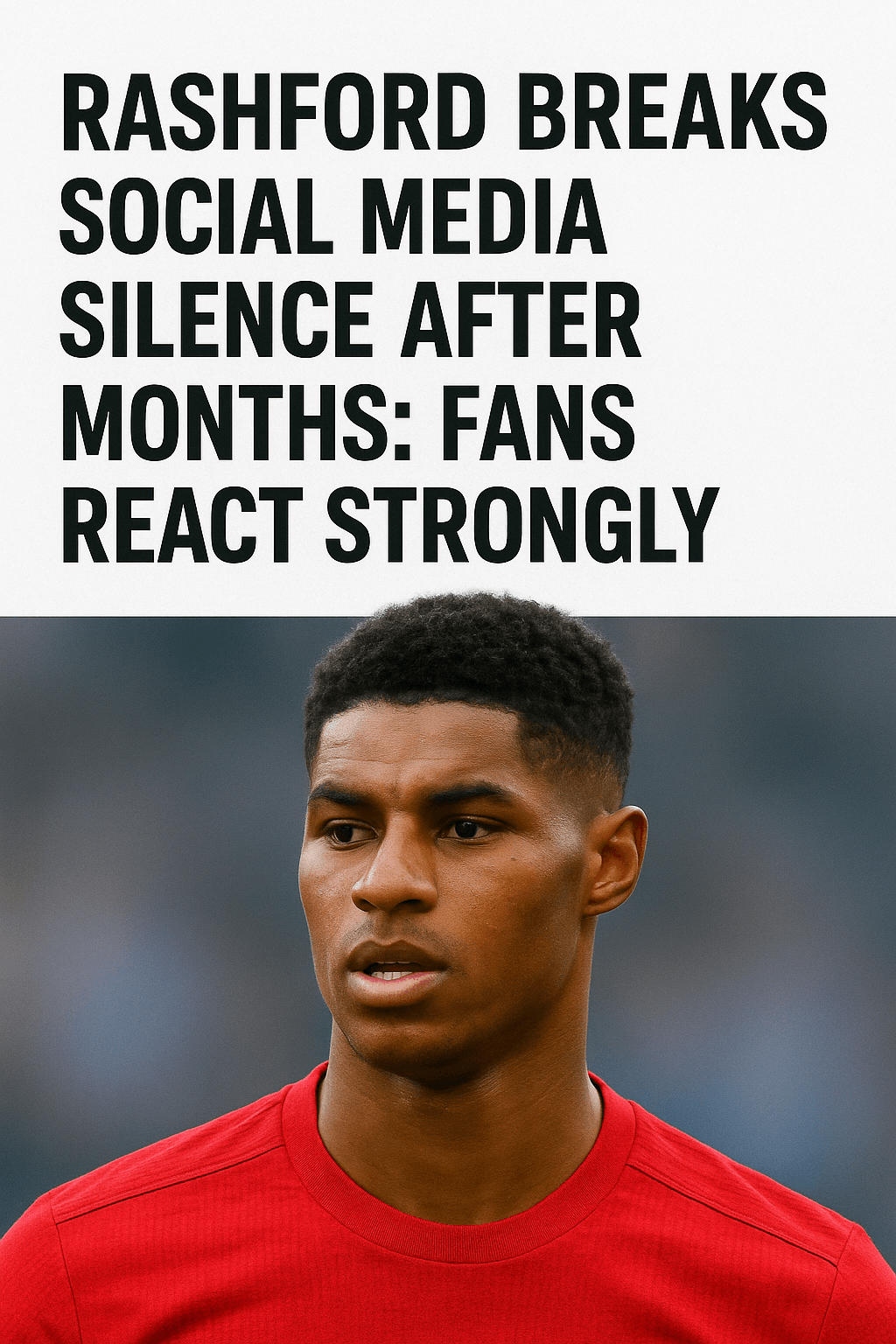

For months, the digital space where Marcus Rashford once held court was a silent void. The Instagram posts, a blend of slick training-ground photos, charitable milestones, and personal reflections, had ceased. The X (formerly Twitter) account, once a platform for passionate advocacy and occasional clapbacks, was dormant. In an era where athletes are perpetually “on,” this silence was deafening. It was a quiet that spoke volumes about the turmoil within one of English football’s most scrutinised figures.
Then, it ended. The moment Rashford breaks social media silence was not with a grand manifesto or a tearful apology, but with a simple, sun-drenched photograph. The post, a carousel of images from a training session in warmer climes, was captioned with a single, determined word: “Reset.”
That one word, after months of radio silence, broke the dam. The reaction was immediate, seismic, and deeply polarising, holding a mirror up to the complex, often contradictory, relationship between a modern footballer and his public.
The Silence: A Descent into Turbulence
To understand the weight of this moment, one must first appreciate the context of the preceding silence. The 2023/24 season was, by any metric, a profound struggle for Marcus Rashford. Just a year removed from the most prolific campaign of his career, where he netted 30 goals and seemed to carry the hopes of Manchester United and England on his shoulders, his form evaporated.
On the pitch, his performances were a shadow of their former selves. The explosive, direct runs were hesitant; the clinical finishing had deserted him. The statistics told a stark story, but the body language screamed even louder. Shoulders slumped, head down, he cut a figure of profound frustration, a player seemingly at war with himself and the game he loves.
This professional dip was compounded by off-field controversies. A much-publicised night out in Belfast, for which he later missed training, led to internal discipline from the club. Tabloid headlines dissected his lifestyle, creating a narrative of a player lost in the trappings of fame, a narrative that stood in jarring contrast to the one the public had become accustomed to.
For years, Rashford wasn’t just a footballer; he was “Marcus Rashford MBE,” the boy from Wythenshawe who forced a government U-turn on child food poverty. He was a symbol of resilience, compassion, and using one’s platform for good. The public had placed him on a pedestal, and the fall from that height was steep and brutal. The social media silence felt like a retreat, a necessary withdrawal from the cacophony of criticism to preserve a battered mental state.
The Return: A Single Word That Said Everything
His return was, therefore, a masterclass in modern communication through understatement. The decision for Rashford breaks social media silence was executed with a carefully curated post titled “Reset.” The images showed a focused, lean Rashford in a non-United training kit, working under a foreign sun. It was a visual declaration of intent: he was away, he was working, and he was rebuilding.
The comment section, however, became the true battleground, a microcosm of the wider fanbase’s fractured opinion.
The Supporters: A Chorus of Encouragement
A significant portion of the response was overwhelmingly positive. Thousands of comments poured in, expressing relief and unwavering support.
“Welcome back, Marc! We’ve missed you. Ignore the haters, we’re with you,” read one highly-liked comment, typical of the sentiment from this camp.
Another user wrote, “That’s my guy. Head down, working. Come back stronger and silence them all. We never lost faith.”
For these fans, Rashford is family. He is one of their own. They remember the local lad who dreamt of playing for United, and they have championed his journey every step of the way. They see his struggles not as a betrayal, but as a challenge he will overcome. To them, the “reset” was a promise—a signal that their hero was gearing up for a triumphant return. They pleaded with him to delete the app again, to focus on his well-being, and to only return to the pitch when he was ready.
The Detractors: A Wave of Scepticism and Vitriol
If one side of the comments was a warm embrace, the other was a cold shower of reality. The detractors were swift and cutting, their cynicism born from a season of disappointment.
“Reset? How about you reset your attitude first? Less partying, more running,” one critical comment garnered significant traction.
Another sarcastically quipped, “Oh, he’s remembered his password. Can he remember how to score now?”
For this group, the post was a hollow PR move. The word “reset” felt like a buzzword, an attempt to gloss over what they perceived as a lack of application and professionalism. They questioned the need for a “reset” when, in their eyes, the solution was simple: work harder on the pitch. The goodwill generated by his phenomenal charity work had, for some, been eroded by the perception that his focus had strayed from football. The post did not placate them; it merely gave them a new focal point for their frustration.
The Deeper Meaning: Beyond the Comments Section
The stark divide in the reaction is about more than just footballing form. It speaks to the immense weight of expectation placed upon Rashford’s shoulders. He is not allowed the luxury of being just a footballer. He is an activist, a role model, a local icon, and a global brand. When one of these facets falters, the entire structure is deemed unstable.
The public, and United fans in particular, have a specific script for their heroes: they must be humble, hardworking, and eternally grateful. Rashford’s off-field ventures, while heroic, have also inadvertently placed him in a double bind. His high profile as an activist means any perceived professional misstep is framed not just as a sporting failure, but as a moral one—a betrayal of the “man of the people” image.
His social media silence was a necessary act of self-preservation. Stepping away from the noise is a crucial strategy for any high-profile individual navigating a mental and professional slump. The act of Rashford breaks social media silence was his attempt to reclaim his narrative. “Reset” is his word. It’s his story now. He is no longer just reacting to criticism; he is, at least publicly, initiating his own process of renewal.
What Happens Next?
The reaction to Rashford’s post is just the first chapter in this new phase. The true test will come on the green grass of the pitch when the new season begins. The “reset” will be judged not by likes and comments, but by tackles won, goals scored, and assists provided.
The divided fan reaction demonstrates that he still has a vast reservoir of goodwill to draw from, but it is not bottomless. His legacy is at a crossroads. One path leads to a redemption story for the ages—the local hero who weathered the storm of public opinion and emerged stronger, cementing his place as a United great. The other is a cautionary tale about the perils of modern fame and the fickleness of adoration. The move where Rashford breaks social media silence was the first step; now, the world watches for the next.
FAQ: Rashford Breaks Social Media Silence
Q1: What does it mean that Rashford breaks social media silence?
A: After months of inactivity, Marcus Rashford has returned to his platforms, signaling a re-engagement with the public and fans after a period of withdrawal.
Q2: How long was Marcus Rashford off social media?
A: While not formally announced, Rashford had been largely inactive on his public Instagram and X accounts for several months during a difficult period in the 2023/24 season.
Q3: What did he post when Rashford breaks social media silence?
A: He posted a series of training photos on Instagram with the simple, powerful caption: “Reset.” This is widely seen as a statement of intent for a fresh start.
Q4: Why did he go silent in the first place?
A: He never officially stated his reasons, but the silence coincided with intense criticism over his form and off-field headlines. It is believed he stepped away to protect his mental health and focus away from online scrutiny.
Q5: How have fans reacted since Rashford breaks social media silence?
A: The reaction is strongly divided. Supporters have welcomed him back with encouragement, while critics have responded with skepticism, demanding he prove his commitment on the pitch.
Q6: What does this mean for his future at Manchester United?
A: The post itself is a personal signal, but it suggests his intent to fight for his place at the club and rediscover his best form under the new structure.
Q7: Is it common for athletes to take such breaks?
A: Yes. Social media breaks are an increasingly common strategy for high-profile athletes to manage mental well-being and escape negative discourse during tough times.


