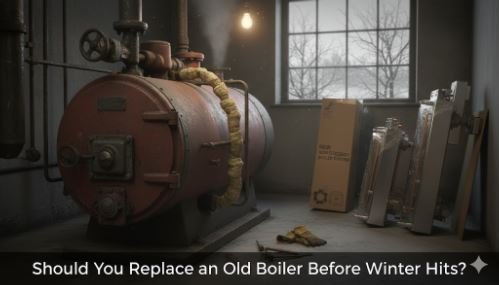

In thousands of UK households every winter, there is the same problem. The heating is switched on. The radiators are lukewarm. The boiler that “worked just fine last year” decides that strange noises must be produced – and suddenly stops functioning altogether. A problematic boiler can quickly become expensive when the temperatures start dropping.
If your boiler is old and possibly faulty, it can prove to be an expensive blunder to put off your plans until the midpoint of winter to attend to it. It is usually recommended to replace your old boiler before the onset of winter to save yourself some cash and avoid stress when heating your home.
This guide will outline when boiler replacement is necessary, the danger of postponing replacement, and ways in which schemes like ECO4 and the Free Boiler Scheme can help offset or eliminate costs.
Why winter is the worst time for boiler breakdowns
Boilers tend to work under maximum load during winter. The moment temperatures drop, the demand for heat increases the operating hours of the boilers. The older the boilers are, the more they tend to struggle when temperatures are low, and the heat demand rises.
Winter breakdowns are more common because:
- Boiler components are already worn
- Condensation freezes in the pipework
- Pressure issues become more frequent
- Small faults turn into major disasters
If the boiler breaks down during the winter months, the cost of repairs may be higher, spare parts may be difficult to procure, and the engineer may be busy.
Signs your boiler may not survive another winter
Many people put off replacing the boiler in their home, given that it is still functioning. There are, however, signs that point to the fact that it is living on borrowed time.
Some of the common red flags include:
- The boiler is over 12-15 years old
- Increase in gas bills despite not increasing usage
- Radiators that take longer to warm up
- Frequent breakdowns or call-outs
- Banging or whistling noises are quite strange.
- The boiler repeatedly loses pressure.
If you notice the presence of more than one of the above signs, it may be cheaper and even safer to change the boiler before the onset of winter.
The real cost of keeping an old boiler
Older boilers, especially non-condensing boilers, are much less efficient than newer models. This type of equipment will often only be between 65% to 75% efficient, meaning that much of the energy that you pay for and use will be wasted.
This generally leads to:
- Higher monthly heating bills
- Uneven heating throughout the home
- Increased carbon emissions
- Ongoing repair costs
Just for one winter, the cost of repairs alone could amount to hundreds of pounds – without even tackling the problem.
How modern boilers work better in cold conditions
Modern A-rated condensing boilers are able to meet the challenge of winter demand. They:
- Recover heat from waste gases
- Maintain stable pressure
- Work better with modern heating controls
Thus, homes heat up quicker, retain heat for a longer period, and consume less gas. For many homes, this becomes a good source of savings during the winter seasons.
Is autumn a good time for replacing a boiler?
Yes – and for good reason. Replacing your boiler before winter:
- Excludes emergency call-out charges
- Gives you more choices for installers
- Allows time for proper testing
- Reduces the risk of cold-weather failure
Contractors will be less busy in the fall season, and so appointments will be easier to come by. Winter replacements may have to be done with limited options and higher stress.
Upfront cost concerns: why people delay boiler replacement
One reason why many families have deferred replacing their boilers is because of costs. Replacing a boiler can be a rather daunting task, especially in today’s increased cost-of-living circumstances.
It is at this point that the role of government support becomes significant. Schemes such as ECO4 make it possible for domestic users may be eligible to receive an upgrade of their boiler free of cost. The financial barrier is thus completely removed.
How the ECO4 scheme supports boiler replacement
ECO4 is basically a government scheme to improve energy efficiency in low-income and vulnerable households across the UK. One of the primary objectives of ECO4 is the installation of energy-efficient and modern heating systems for inefficient ones.
If you qualify, ECO4 can cover:
- Disposal of your old boiler
- New A-rated boiler supply
- Installation by qualified engineers
- Basic heating controls
For many households, the entire upgrade is fully funded.
What is the Old Boiler Replacement Grant?
The old boiler replacement grant scheme enables the eligible household to change their old boilers at no initial cost to them. This scheme primarily targets energy efficiency as well as fuel poverty.
You may be eligible if:
- Your boiler is old or non-condensing
- You receive qualifying benefits
- Your home has a low EPC rating
In fact, for pensioners and low-income families, such a grant can make replacing a boiler beforehand a practical and worthwhile decision.
Who should seriously consider replacing before winter?
Replacing your old boiler before winter is especially important if:
- You depend on heating for health reasons
- You live with elderly or vulnerable occupants
- Your boiler has already broken down many times in the past year.
- Your house is not well-insulated
Under these circumstances, a boiler breakdown in the cold season may readily constitute a serious health problem.
Boiler replacement vs repair: which one is better?
Repairs may prove useful for newer systems, but for older boilers, repairs could turn out to be a false economy.
- Repair costs exceed £300–£400 repeatedly
- Parts are becoming obsolete
- Efficiency is clearly declining
It can cost less to replace something rather than make several repairs over a number of winters.
Energy bills: what difference can a new boiler make?
While savings vary by household, many people notice:
- Less use of gas
- Shorter heating times
- Better-regulated indoor temperatures
Over a winter period, these enhancements will make a big difference – especially in homes that had difficulty heating in the past.
What happens if you wait until winter?
Waiting increases the risk of:
- Emergency replacement at very short notice
- Limited installer availability
- Temporary electric heaters contribute to bills
- Cold indoor temperatures
In extreme instances, the issue can leave entire households without heating for days when it is freezing.
How to take the next step before winter arrives
If your boiler is ageing, the best time to act is before temperatures drop.
Start by:
- Checking the age and condition of your current boiler
- Booking a free eligibility check for ECO4 support
- Arranging a free home survey if eligible
- Planning installation ahead of peak winter demand
There is no cost to check eligibility, and no obligation to proceed.
The Bottom Line
One of the most valuable things that a household can do is change its old boiler system before winter sets in. This will eliminate the odds of a breakdown occurring, and at the same time, it will result in cheaper source energy.
Many people in the UK can benefit from the financial help that is available, such as the ECO4 scheme and the Free Boiler Grants, to finance the replacement of their old boiler. This helps them to be able to replace their boiler with less financial worry and to be assured of having a warmer home during the coming winter.